September 26, 2026
A mews house is a lovely thing in June. By January it can be a different story. Coach-house proportions, cobbled courtyards, parapet gutters and long stretches of solid brick are charming right up until the first hard frost, when water finds every small gap you decided to deal with in spring. The reassuring part is that almost everything a mews house needs before winter is unglamorous, inexpensive work — a few hours with a ladder, a torch and a broom, or one morning booked with a local trade.
Work top to bottom and outside in. That way nothing gets missed and you avoid clearing the same courtyard twice.
Gutters, Hopper Heads and Downpipes
Water does more damage to a mews house than cold does, and most of it arrives via the roof drainage. Mews gutters are often awkward: parapet gutters hidden behind a low wall, a hopper head tucked against the party wall, cast-iron downpipes running down the inside face of the courtyard where you never quite look.
Clear them after the leaves have dropped but well before the frosts arrive. Late October to mid-November suits most of the country; if you have a large sycamore or lime nearby, you may need a second pass in December.
What to check while you are up there
- Lift out debris by hand rather than flushing it down — moss, grit and seedling roots collect in the silt and set like concrete.
- Check the fall. Water should run briskly to the outlet. Standing water means a sagging gutter or a blocked downpipe.
- Look at the joints on cast iron. Cracked putty or mastic, and rust bleeding down the outside of the gutter, point to a leak that will soak the wall below.
- Clear the hopper head. A single fistful of moss there can back the whole run up.
- Rod or hose the downpipes. If water backs up, there may be a break below ground; that is a job for a drainage contractor.
- Check where the downpipe discharges. If it dumps water onto the cobbles beside the wall, it will find its way into the brickwork. A shoe directing it to a gully makes a real difference.
Lagging Pipes and Protecting the Water System
Frozen pipes are the classic winter emergency, and mews houses have more than their share of vulnerable runs: pipes in unheated garages, in loft spaces behind the parapet, under floors, and along external walls.
Start with the outdoor tap. If there is an isolation valve inside, turn it off and drain the tap down. If not, fit an insulated cover. Then lag every pipe in an unheated space, paying particular attention to bends, elbows and valves — those freeze first. Foam sleeving is fine for a straight run, but wrap and tape the awkward bits properly rather than leaving gaps.
Do not compress loft insulation into the eaves or block ventilation there. Cold air needs to move above the insulation; trapping warm, moist air in a cold roof space invites condensation and rot.
One modern nuisance worth planning for: the condensate pipe from a condensing boiler. It often runs outside, and when it freezes the boiler shuts down. Lag it, check the route, and consider having it re-run internally if it is repeatedly a problem.
Finally, find your stopcock and check that it actually turns. If you go away, leave the heating on a low background setting rather than switching it off entirely.
Damp, Condensation and Ventilation
Most mews houses were built with solid walls and small windows. They were never designed to be sealed up and heated hard. That combination produces condensation, which is often mistaken for rising damp — tide marks, salt bloom, a musty smell in a cupboard on an external wall.
Check your low-level air bricks first. They are easily blocked by a raised cobble level, a new patio, or a well-meaning previous owner. Clear them and keep them clear. Pull furniture a hand's width away from external walls so air can move behind it. Use extract fans in the bathroom and kitchen, and open windows wide for ten minutes rather than a crack for three hours — a short, sharp airing moves more moisture and loses less heat.
Dry washing outside when you can. If damp persists after all that, it is usually a leak, a blocked drain, failed render or high ground levels. Those need proper investigation rather than another coat of sealant.
Cobblestone Drainage in the Courtyard
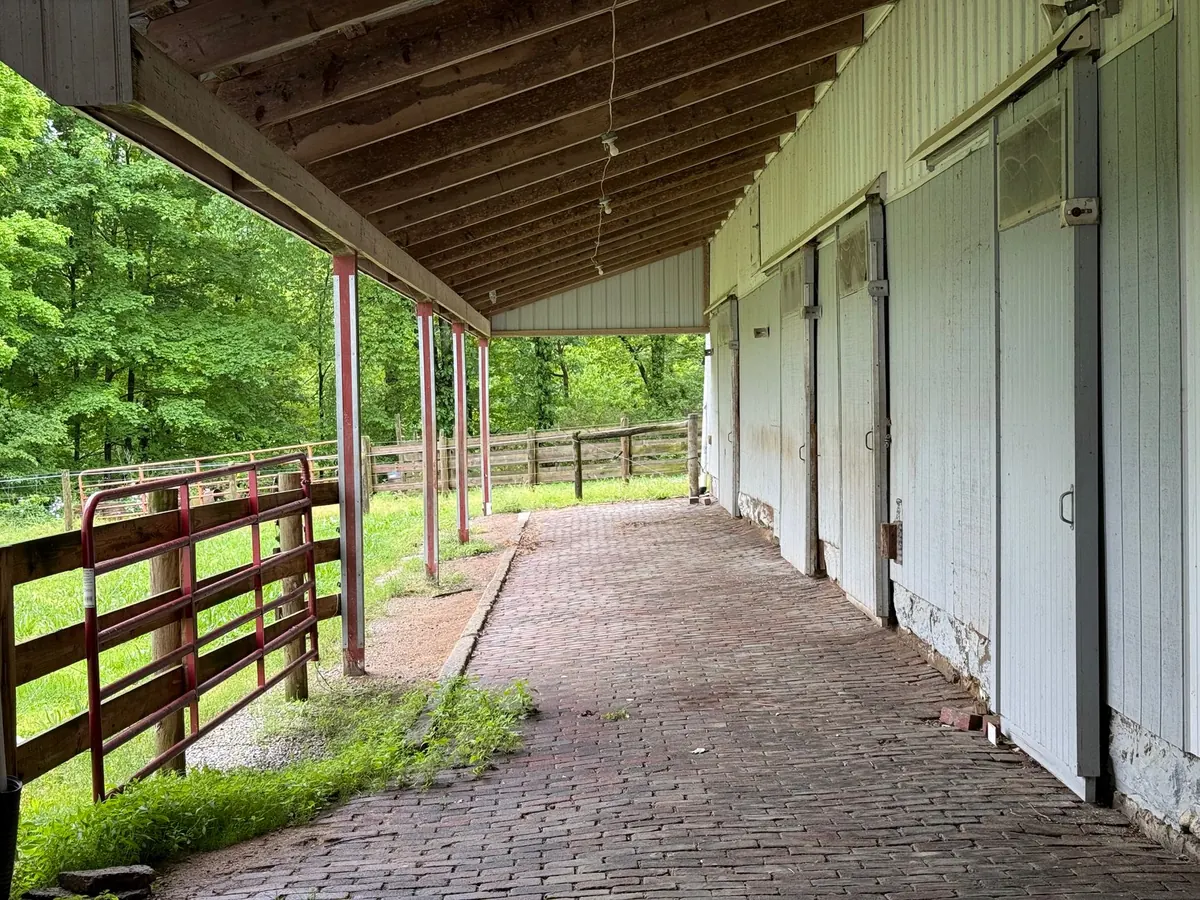
Cobbled courtyards are beautiful and, in winter, bossy. Traditional setts are laid on sand with sand joints, so they move, hold weeds and can heave in a hard frost. The important thing is that water still knows where to go.
Clear every gully and leaf trap before the wet season starts. Check the fall across the courtyard: water should head for the gully, not pool by the door. Old mews thresholds often sit barely above cobble level, which is why a puddle at the kitchen door appears every December. A removable flood barrier or a channel drain across the threshold is a sensible retrofit.
When the surface is dry, brush kiln-dried sand into the joints and let the rain settle it, or use a stabilised jointing compound. Avoid blasting cobbles with a high-pressure washer; it scours the joints, loosens the setts and strips the very sand that holds them. If the courtyard floods repeatedly, have a drainage contractor look at it, particularly where drains are shared with neighbours.
Exterior Paint and Timber Protection
Autumn is the best window for exterior painting, but only on the right day. Paint needs dry timber, a dry forecast for the next day or so, and temperatures comfortably above about 10°C to cure properly. Painting in the cold or over damp wood simply traps moisture and peels by spring.
Preparation matters more than the paint. Scrape back flaking areas, sand the edges feather-smooth, treat any rot with a suitable preservative, and prime bare timber before topcoating. Cast iron needs rust spots taken back to metal and a metal primer before the finish coat.
Check the vulnerable spots first: window sills, the bottom edge of doors, thresholds, and anywhere a downpipe runs close to the wall. On old brickwork and lime render, use a breathable masonry paint. Sealing a solid wall with a plastic film traps moisture inside and causes more damage than weather alone. While you are looking at the walls, check the pointing — and if the original mortar is lime, repair it in lime, not cement.
A Pre-Winter Checklist
- Clear gutters, hopper heads, downpipes, gullies and leaf traps.
- Lag the outdoor tap and all pipes in unheated spaces, including the boiler condensate.
- Check the loft, ceilings and external-wall cupboards for damp; clear air bricks.
- Sweep sand into cobble joints and check the courtyard fall.
- Service the boiler and run the heating before you actually need it.
- Cut back climbers and shrubs away from render, gutters and air bricks.
- Touch in paint on sills, door bottoms and any bare timber.
- Locate the stopcock and confirm it turns.
Timing, Trades and Neighbours
Book gutter clearance, boiler servicing and any drainage work in early autumn. By the first cold snap, everyone in the street wants the same trades on the same week, and the ones worth having are already busy.
Mews living is close living. Shared party walls, shared drains and shared access mean a blocked gully or a leaking parapet gutter is rarely only your problem, and a quiet word with a neighbour before you start cutting back a climber or repointing a wall saves a great deal of friction later.
Finally, do one walk-round in the rain. Stand in the courtyard with a torch and watch where the water goes. Ten minutes in a downpour tells you more about your drainage than an hour of dry inspection — and it is the cheapest survey you will ever commission. For anything structural, electrical, gas-related or persistently damp, bring in a qualified professional rather than working from guesswork.
Photo: Max Vakhtbovych / Pexels