September 11, 2026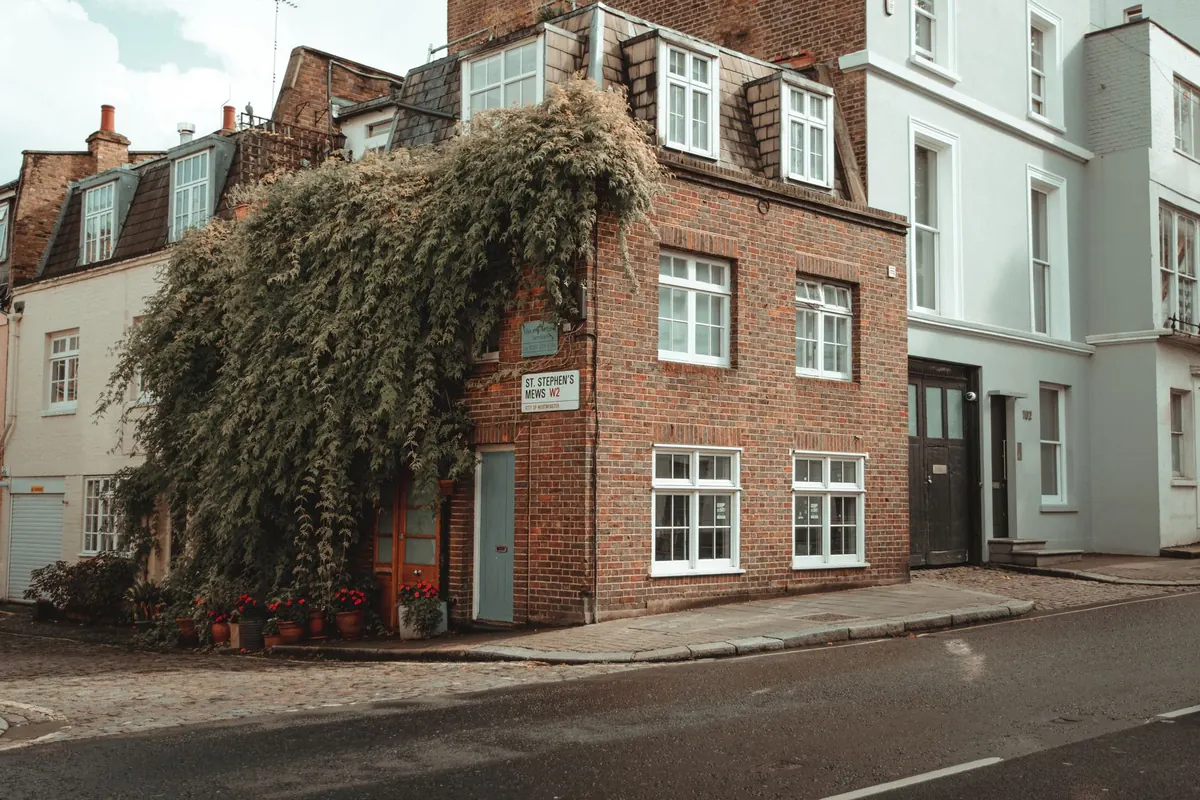
Walk behind almost any grand London terrace and you will find a smaller street running parallel to it, usually narrow, often cobbled, occasionally gated. That is a mews. It was built to house horses, carriages and the people who looked after them, and it is now one of the most fought-over pockets of residential property in the country. It is also peculiar. A mews house comes with a set of rules, costs and daily realities that a normal terraced house does not, and buyers who fall for the look sometimes meet the paperwork much later.
What actually makes a mews house a mews house
A mews house sits on a former service street, behind a row of larger houses, and was originally built as stabling, a coach house or accommodation for grooms and drivers. The conversion to housing happened gradually through the twentieth century, which is why so many of them still carry the shape of their previous life.
The giveaway features tend to be consistent:
- A narrow frontage, often five or six metres, with the door opening directly onto the street and no front garden.
- Two or three storeys, with the ground floor once used for carriages, horses or later cars.
- Wide carriage-style openings or an integral garage that sits underneath living space.
- Smaller windows than the terrace it backs onto, and lower ceilings on the ground floor.
- A modest courtyard, a roof terrace, or sometimes no private outdoor space at all.
- A street that is private rather than adopted by the council, frequently gated at one end with an old keeper's lodge.
Not every property marketed as a mews is one. The word gets used loosely for any back-lane conversion, so check the street name, the local conservation area appraisal and the proportions of the neighbouring buildings before you take the label at face value.
Why they look the way they do
The working mews existed to keep horses, carriages, fodder and servants out of sight of the main house. Everything about the architecture follows from that: robust ground floors, generous doorways for vehicles, plain facades, and upper floors that were once staff quarters with considerably less headroom and light than the family house across the garden wall.
When cars replaced horses, many mews became garages and workshops. From the middle of the last century they began turning into homes, and that history is still audible. In plenty of mews, the sitting room sits directly above what is now a garage, a utility room or a bedroom carved out of the old coach bay. It is worth remembering when you are measuring for furniture: a piano may fit upstairs but never make it around the bend in the stairs.
What a mews costs to buy and to keep
Prices vary enormously from street to street, so any figure quoted to you should be treated as local and temporary. What holds true more generally is that mews houses in prime areas carry a premium per square foot. Supply is tiny, the stock rarely comes up, and buyers who want the cobbles and the privacy tend to want them badly. You may find a smaller mews house priced close to, or above, a considerably larger house on the neighbouring square.
Running costs deserve just as much attention as the purchase price. Expect the following to be higher or more complicated than in a standard house:
- Insurance. Private roads, shared structures and unusual construction can all push premiums up. Declare everything.
- Road maintenance. If the mews is private, somebody pays to resurface it, light it and repair the gates. Find out who, and how much.
- Heating. Period mews houses are often poorly insulated, and conservation area or listed building rules can restrict what you are allowed to change about windows and doors.
- Roofs and terraces. Flat roofs and roof terraces need maintenance, and leaks have a habit of appearing in the room below.
On money and legal matters, take advice from a solicitor and a surveyor who have worked on mews properties before rather than relying on general guidance.
The legal quirks that catch people out
The title to a mews house is often more complicated than the building itself. Common issues include a freehold house on a road owned by someone else, a management company collecting an annual charge for the road, and deeds of covenant setting out who pays what share of repairs. Neighbours may hold a right of way across your forecourt to reach a garage at the back, which is easy to miss on a plan and hard to live with if you park there.
Covenants are the other quiet trap. Old restrictions can prohibit trade from the premises, restrict signage, or prevent you from erecting structures or hanging washing outside. Many mews sit inside conservation areas, and some buildings are listed. In practice that means planning permission or listed building consent for dormer windows, roof lights, replacement windows, external painting, new gates, and converting a garage into a habitable room. Ask what neighbours have been granted and what they have been refused; that history tells you more than any policy document.
What daily life on a cobbled street is really like
Quiet, but not silent. There is almost no through traffic, which is the whole point, and children can play outside in a way that would be unthinkable on a main road. But sound behaves oddly between hard surfaces. A car door at seven in the morning, a delivery trolley, a neighbour's conversation on a doorstep: cobbles and narrow walls carry all of it.
You will know your neighbours. That is usually a pleasure and occasionally a negotiation, and most mews streets run some kind of group chat for bin days, parking and shared repairs. Expect the practical to be fiddly. Removal vans often cannot reach the door, so furniture goes in through a first-floor window. Bicycles, bins and building materials compete for a very small amount of space. Ground floors can be dark; upper floors get the light. Outdoors means a courtyard or a roof terrace rather than a garden.
A practical checklist before you buy
- Read the title plan and look specifically for rights of way over your land and yours over anyone else's.
- Ask for three years of road maintenance accounts, the current annual charge, and the name of whoever manages it.
- Visit at 7.30am on a weekday and again at 10pm on a Saturday, and walk the whole street, not just the front of the house.
- Measure the garage opening against your actual car, and check headroom on the ground floor if you are tall.
- Search the planning history for the street to see what has been approved and refused.
- Commission a building survey from someone experienced with period conversions, and ask directly about damp, roof condition and drainage.
Before you commit
A mews house rewards buyers who like the trade-offs rather than those who merely like the photograph. You are buying character, privacy and a genuinely unusual address, and in exchange you accept small rooms, awkward access, shared obligations and a street that is never quite yours alone. Spend an hour on the pavement before you make an offer. If the noise, the parking and the neighbours all feel workable, the rest is usually charm.
Photo: Gonzalo Facello / Pexels